

Back

Creating the Definitive Pharmacy Chatbot Experience at Walgreens

Overview

As part of the mobile product and design leadership team at Walgreens, I led the design direction for a conversational healthcare experience within the Walgreens mobile app ecosystem—an initiative focused on transforming how patients interact with prescriptions, medication history, pharmacy services, and support systems.

The challenge was not simply designing a chatbot.

It was designing a healthcare companion that could responsibly navigate highly sensitive patient contexts while maintaining trust, empathy, speed, and clarity.

At the time, most healthcare chat interfaces operated like scripted FAQ systems. We wanted to create something fundamentally more intelligent and human-centered:

A system aware of prescription context
Capable of understanding patient intent
Designed to reduce anxiety and confusion
Able to escalate seamlessly to real pharmacists and support staff when needed

The result was a conversational design framework that helped bridge digital convenience with human healthcare expertise.

The Problem

Healthcare interactions are emotionally loaded.

Patients are often:

Managing multiple prescriptions
Interpreting unfamiliar drug terminology
Navigating insurance and refill complexity
Dealing with urgency, confusion, or stress

Traditional pharmacy interfaces forced users through rigid workflows:

Search screens
Menu trees
Long forms
Dense prescription tables

This created friction precisely when clarity mattered most.

The opportunity was to rethink the pharmacy experience through conversation.

The Vision: A Context-Aware Healthcare Assistant

Our vision was to create an assistant that felt less like software and more like guided support.

The experience needed to understand:

Prescription status
Medication history
Refill timing
Drug-specific information
User intent and urgency
Escalation thresholds requiring human intervention

Rather than forcing users to “learn the system,” the system needed to adapt to natural human behavior.

Questions like:

“Can I refill my blood pressure medication?”
“Did my prescription get approved?”
“Can I take these two medications together?”
“Why is my refill delayed?”

…needed immediate, contextual answers.

Humans are the feature, not a bug

One of the biggest mistakes in conversational AI is pretending automation can solve everything.

In healthcare, this becomes dangerous.

We designed the system to intentionally recognize moments where:

  • Emotional reassurance was needed
  • Clinical ambiguity existed
  • Regulations required human involvement
  • Patient safety took priority

The assistant could intelligently defer to:

  • Pharmacists
  • Customer support
  • Live care teams

without breaking the experience.

This “human-in-the-loop” approach became a foundational design principle.

The goal was never to replace pharmacists.
It was to make expert healthcare support more accessible.

Outcomes and Product Impact

The conversational framework fundamentally changed how patients engaged with pharmacy workflows inside the Walgreens ecosystem.

Key improvements included:

Faster refill completion flows
Reduced navigation complexity
Increased mobile engagement
Better support discoverability
Reduced friction in prescription management
Improved confidence in self-service healthcare actions

Most importantly, it demonstrated that conversational design could function as a meaningful healthcare interface—not just a novelty layer.

Lessons Learned

1. Healthcare Requires Emotional UX

People are not simply “users” in healthcare systems. They are patients dealing with uncertainty.

2. AI Should Reduce Anxiety, Not Add Complexity

The best conversational systems simplify difficult moments.

3. Human Escalation Is Part of Good AI Design

The smartest systems know when to step aside.

4. Context Is Everything

Healthcare conversations become exponentially more useful when tied to patient history and real-time prescription context.

We introduced patterns such as:

Progressive Disclosure

Only presenting information when needed to avoid overwhelming users.

Context Retention

Remembering prior interactions within a session:

“You asked about this prescription earlier.”

Confidence-Based Escalation

If the system detected ambiguity or elevated risk, it deferred gracefully:

“I’d like to connect you with a pharmacist to make sure you get the best guidance.”

Conversational Shortcuts

Returning users could perform complex actions with fewer steps:

“Refill my usual prescriptions.”
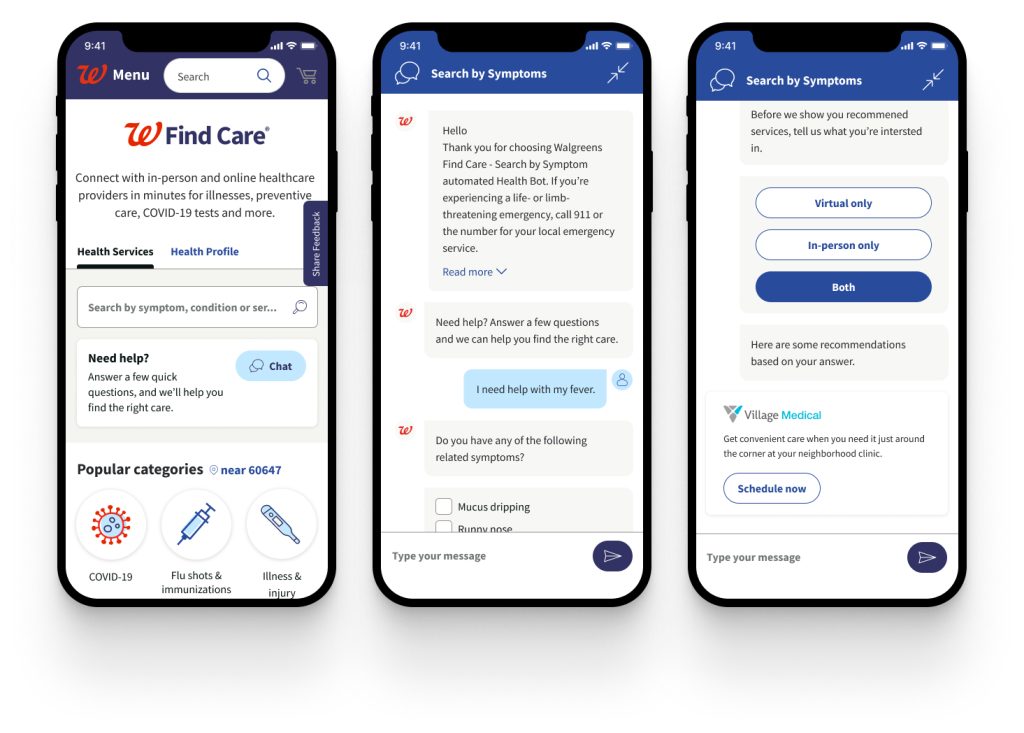
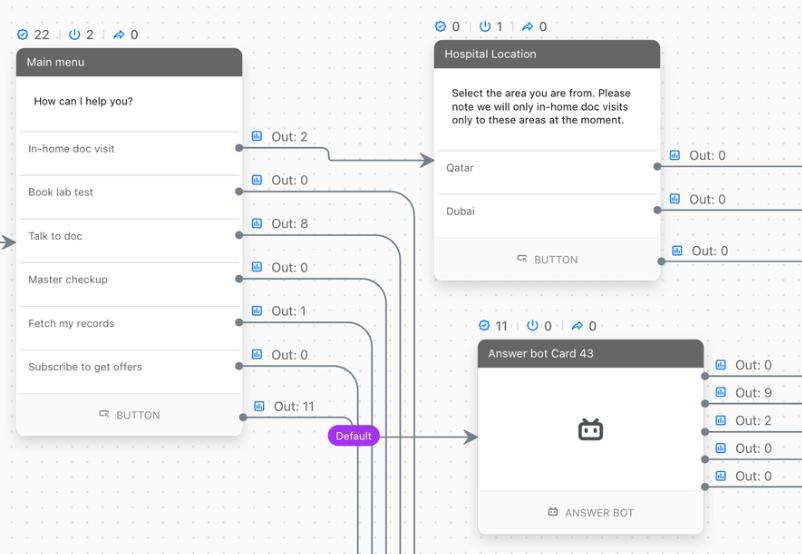
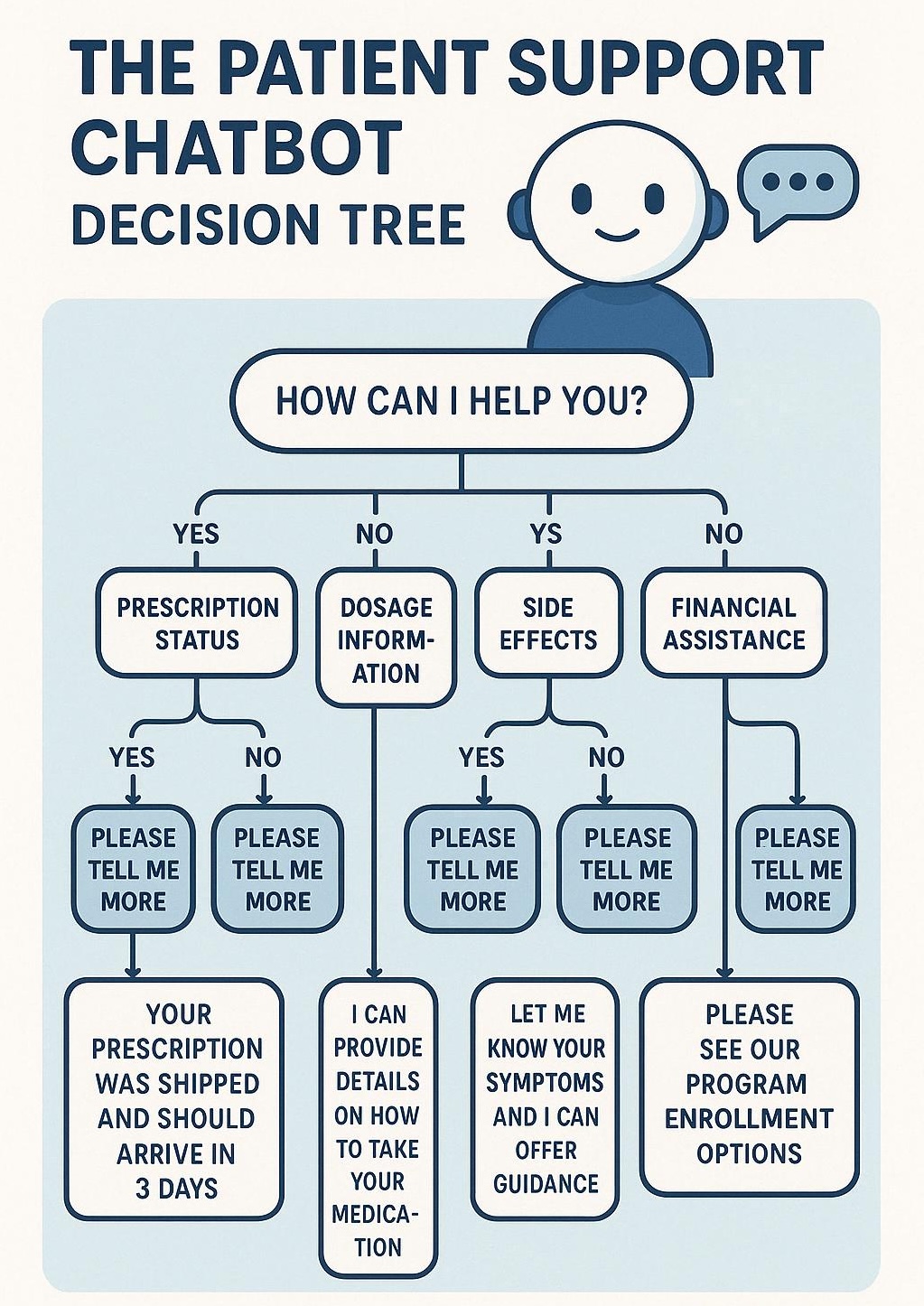
Building Conversational Flows

Closing Thoughts

Designing conversational healthcare systems at Walgreens was an early exploration into what has now become a massive shift toward AI-assisted healthcare experiences.

But the core lesson remains timeless:

Great healthcare technology does not replace human care.
It creates better pathways to it.

The future of healthcare UX lies not in removing people from the experience—but in designing systems that make expertise, empathy, and support more immediate and accessible than ever before.

meghasandeshani
meghasandeshani
https://shivsandesh.com