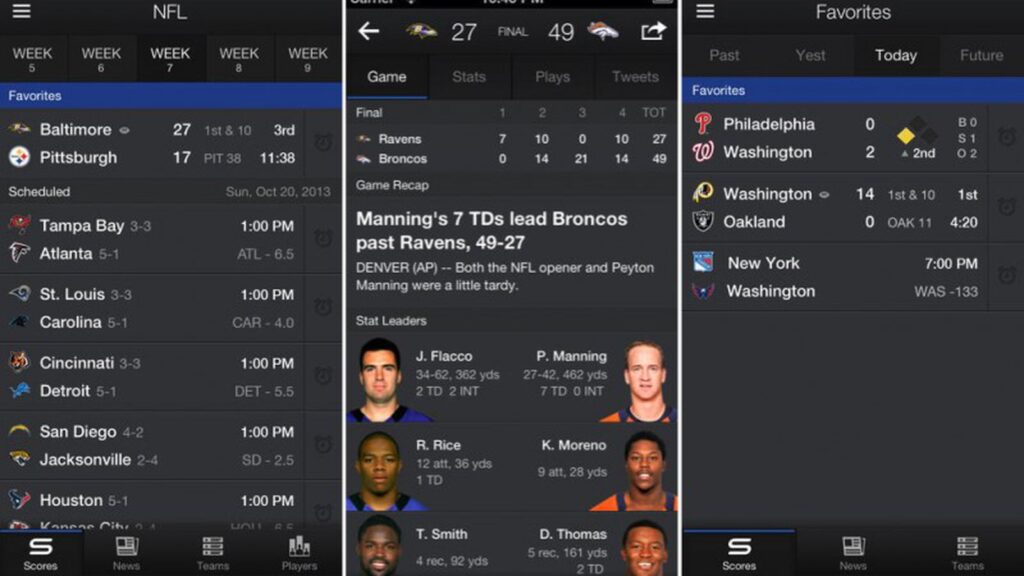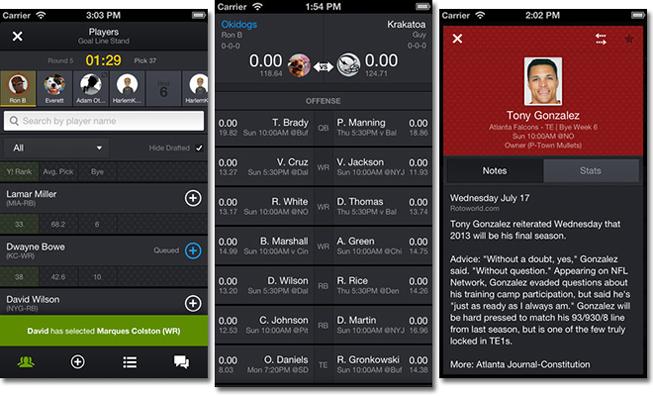
In 2013, fantasy sports were exploding—but the mobile experience hadn’t caught up.
Most platforms were still treating mobile as a lightweight companion to desktop. Drafts were clunky, stats were buried, and real-time engagement felt like an afterthought. As the lead for the fantasy sports group at Yahoo, I saw an opportunity to flip that model entirely.
Instead of asking, “How do we shrink desktop to mobile?”
We asked, “What does fantasy sports look like if mobile is the primary experience?”
That shift changed everything.
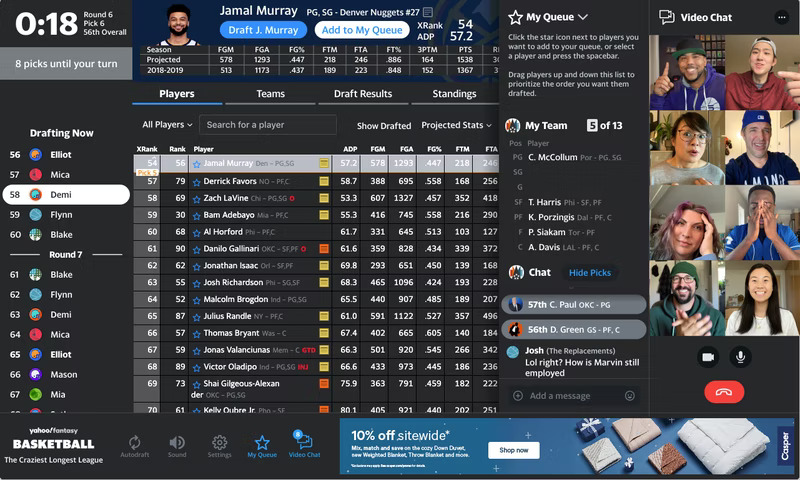
yahoo-fantasy-draft-together.jpg
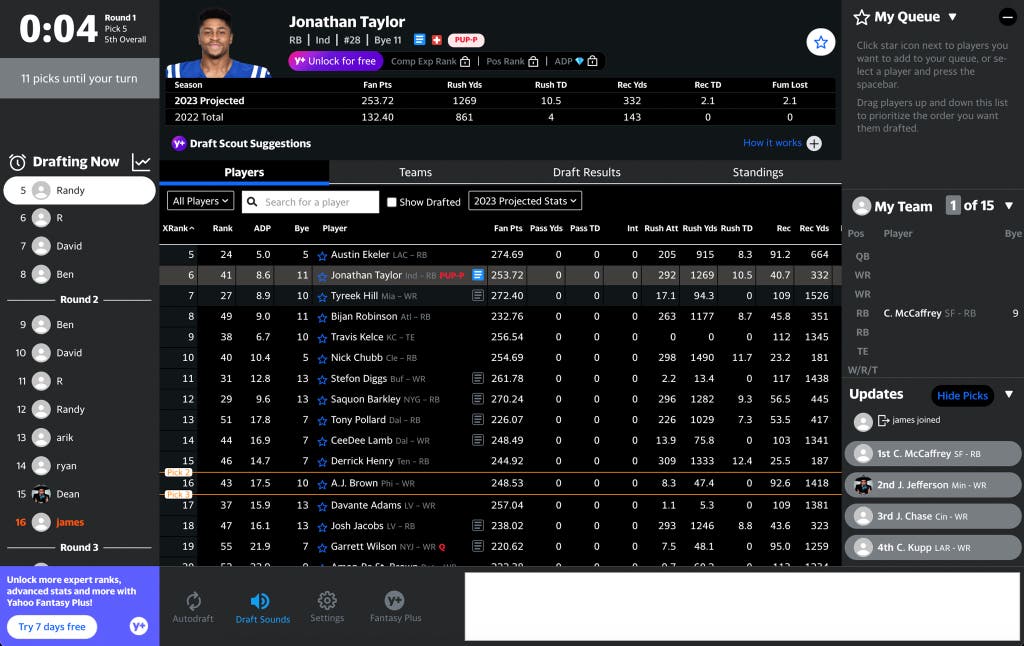
fantasyfootballplatform-2048px-yahoo-mock-draft.jpg
Fantasy sports had already become a deeply social, highly competitive experience. But the product design lagged behind user behavior:
- Drafting required laptops and spreadsheets
- Mock drafts were limited and disconnected
- Matchmaking for leagues was inconsistent
- Stats lacked clarity and real-time relevance
- The experience broke down during live gameplay moments
Users didn’t want a tool. They wanted an arena—fast, responsive, and always available in their pocket.
We set out to build a mobile-first platform that supported the full lifecycle of a fantasy player:
- Preparation → Research, rankings, mock drafts
- Drafting → Real-time, high-stakes decision making
- Competition → Weekly matchups, live scoring
- Optimization → Stats, waivers, roster changes
The goal was simple: eliminate friction at every stage and create a continuous, engaging loop.
Drafting is the most critical moment in fantasy sports—and historically the most stressful.
We introduced Draft Central, a unified interface that brought together:
- Player rankings and projections
- Real-time draft board updates
- Position scarcity insights
- Contextual recommendations
This wasn’t just a feature—it was a decision engine. It allowed users to think strategically in real time, without leaving the draft screen.
Before 2013, mock drafts were either static or required desktop access.
We made them:
- Instantly accessible on mobile
- Fast and repeatable (run multiple scenarios quickly)
- Realistic, with simulated user behavior
- Integrated into the main experience
This fundamentally changed how users prepared. Drafting went from a one-time event to a skill users could actively improve.
Getting into a league used to be one of the biggest drop-off points.
We introduced smarter matchmaking systems that:
- Connected users to public leagues instantly
- Matched skill levels and preferences
- Simplified invites and onboarding
- Reduced time-to-play dramatically
This opened up fantasy sports to a much broader audience—not just existing friend groups.
The biggest success wasn’t just feature adoption—it was behavior change:
- Users started drafting on mobile, not desktop
- Engagement extended beyond game day into daily interactions
- Mock drafts became a habit, not a novelty
- New users could onboard without prior fantasy experience
We didn’t just improve the app—we expanded the market.
What Made It Work
Looking back, a few principles made the difference:
1. Mobile as the Primary Surface
We didn’t compromise. Every decision assumed mobile was the main platform—not a secondary one.
2. Speed Over Perfection
Fantasy sports is real-time. Latency kills engagement. We prioritized responsiveness above all.
3. Systems, Not Features
Draft Central, mock drafts, and stats weren’t isolated features—they were part of a connected ecosystem.
4. Design for Pressure Moments
Drafting and live matchups are high-stakes. We designed for clarity under pressure, not just aesthetics.